
Historical Heritage and a Contemporary Formal Environment
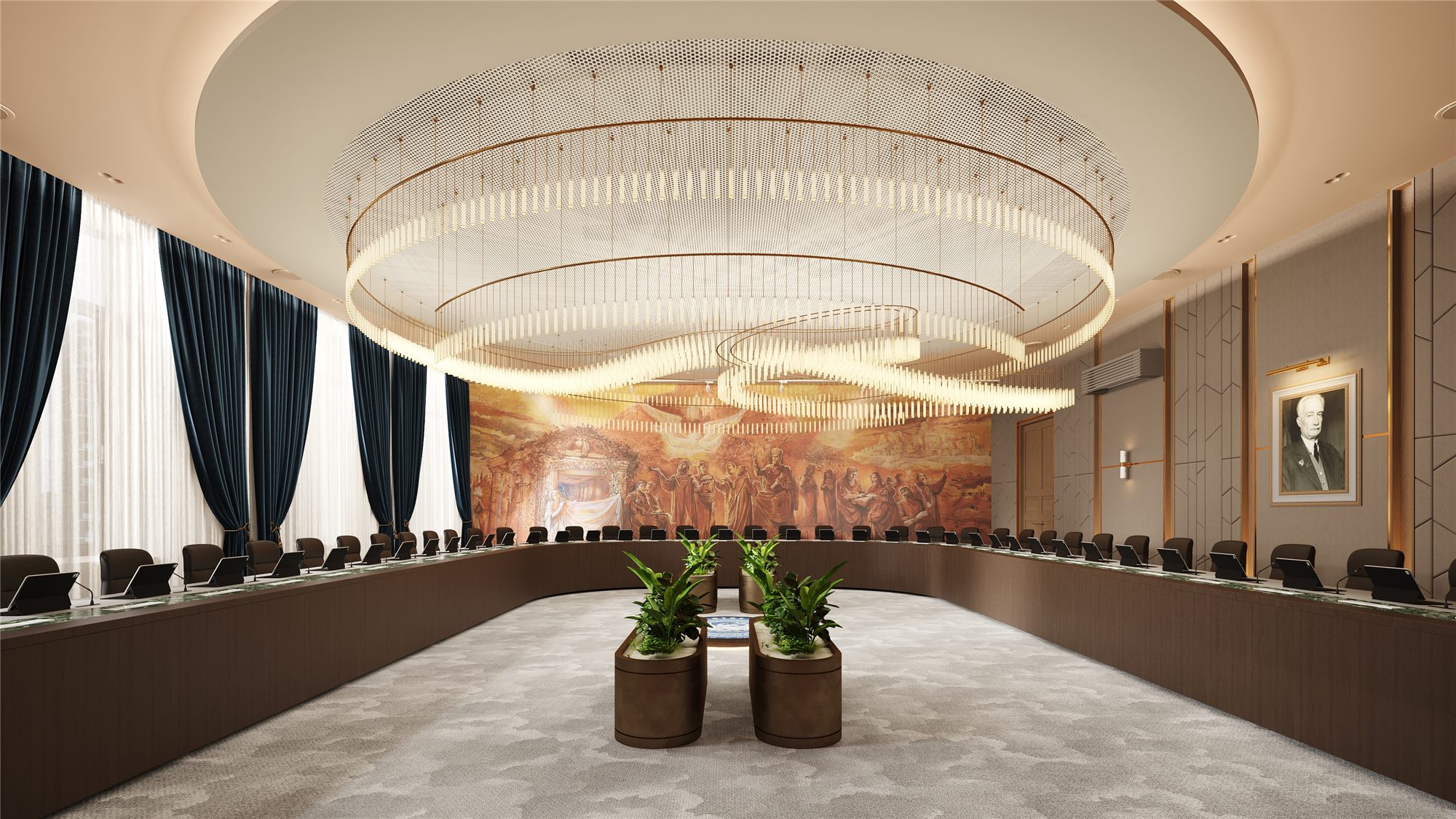
The Auditorium No. 107 project at Tbilisi State University’s Building I represents a compelling example of the interplay between historic architecture and contemporary interior design. The space is intended for conferences, presentations, and formal representative meetings, placing specific demands on its design. The interior must express the institution’s significance, provide a dignified setting for official gatherings, and meet the functional requirements of a contemporary conference space.
For ROOM DESIGN STUDIO, the primary objective was to create an interior in which historical heritage would not be overshadowed by contemporary design interventions, but would remain the defining value of the space.
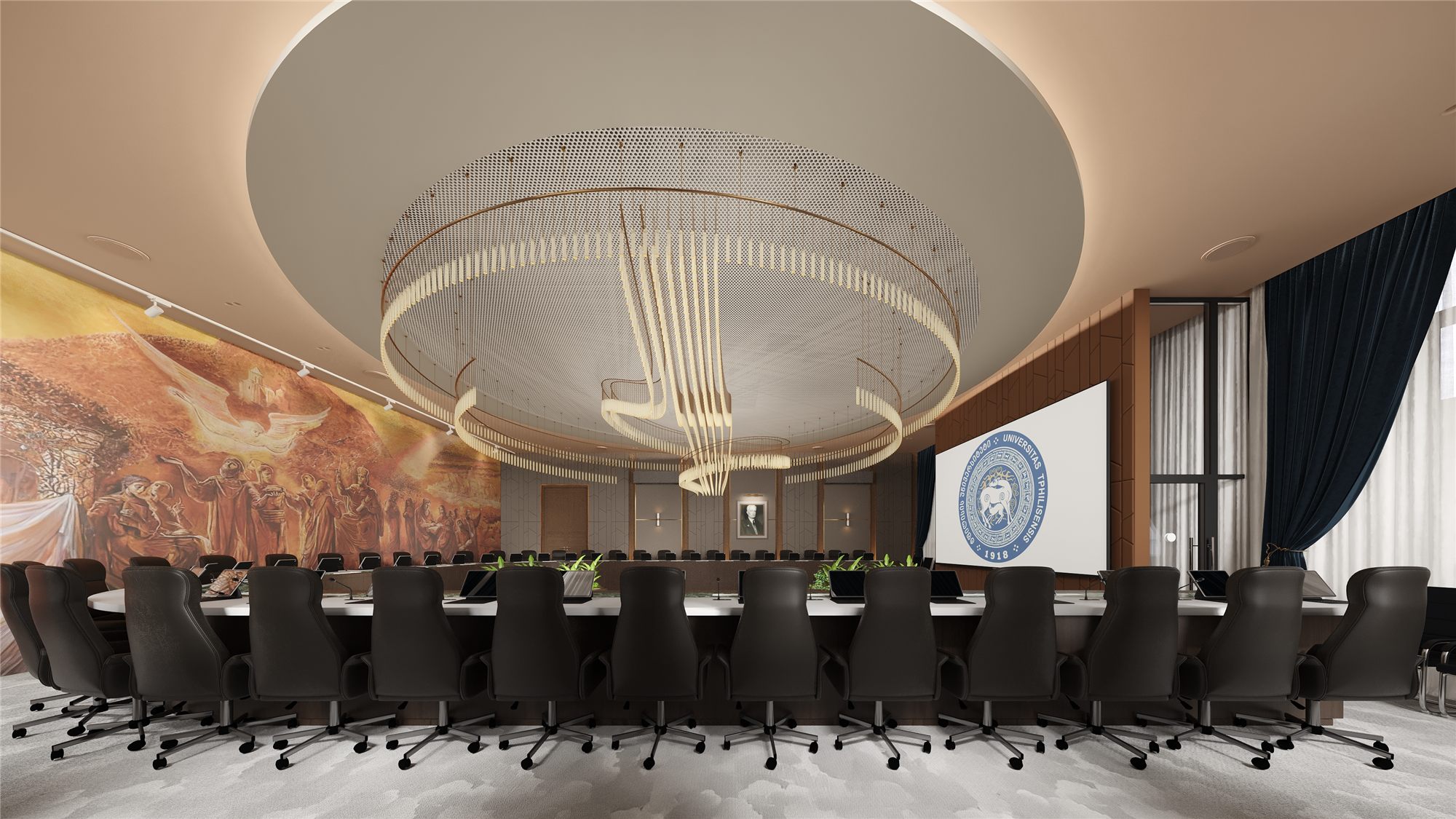
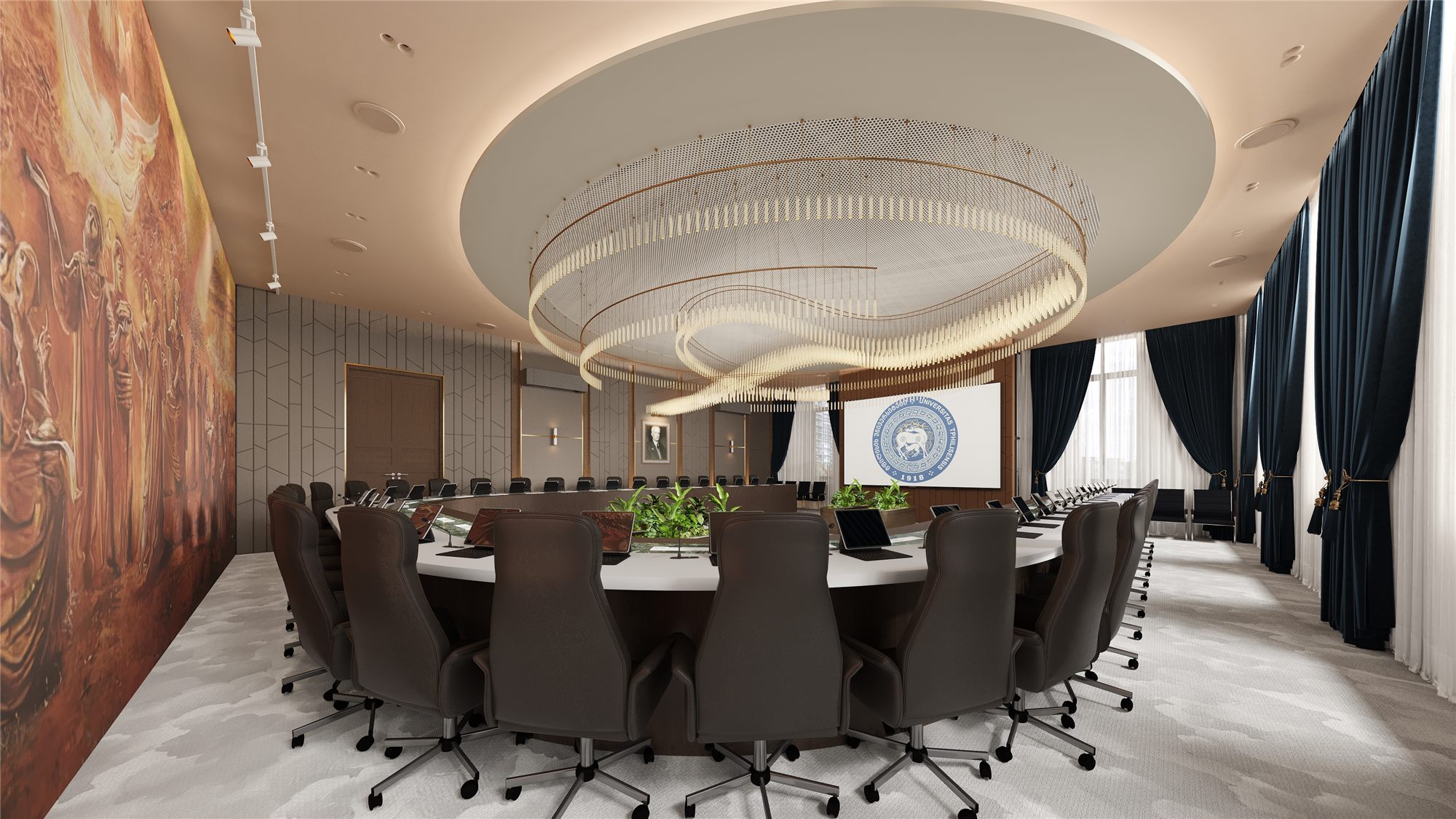
The historic fresco became the starting point of the concept. Its artistic significance informed the overall design approach, material selection, and placement of decorative elements. Each decision was considered as part of the overall composition, ensuring that contemporary interventions would enhance the visual significance of the fresco rather than compete with it.
Spatial Composition — The U-Shaped Conference Table
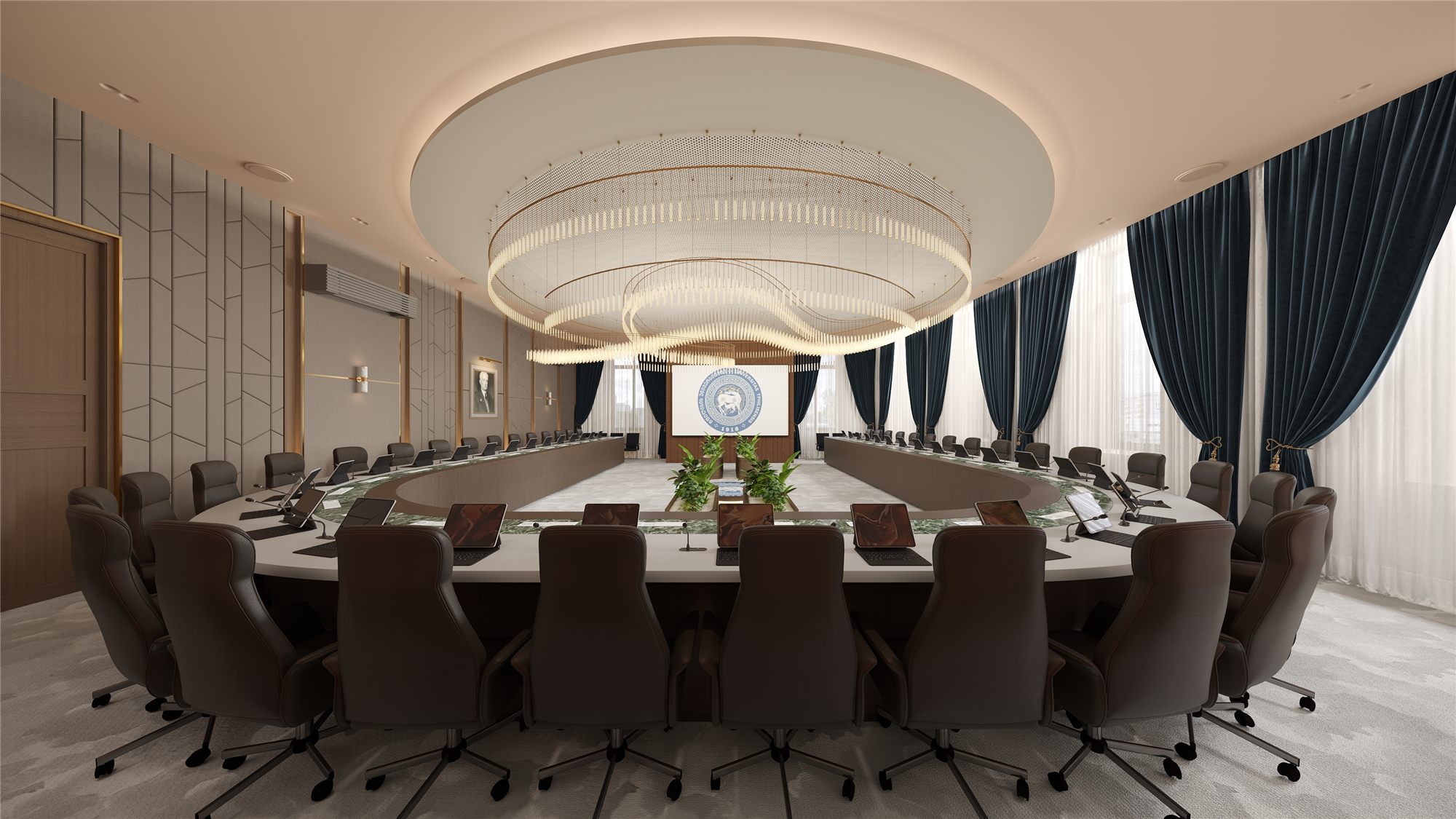
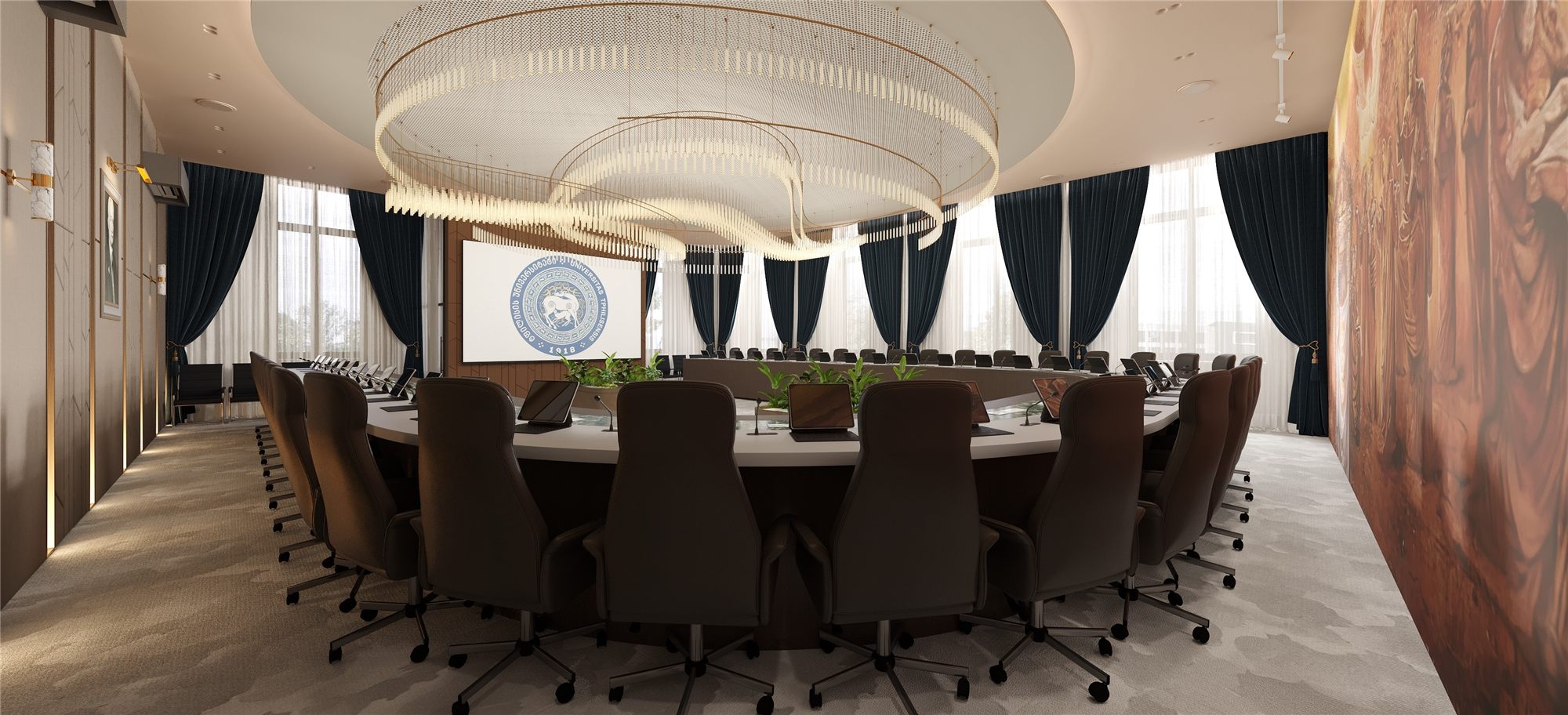
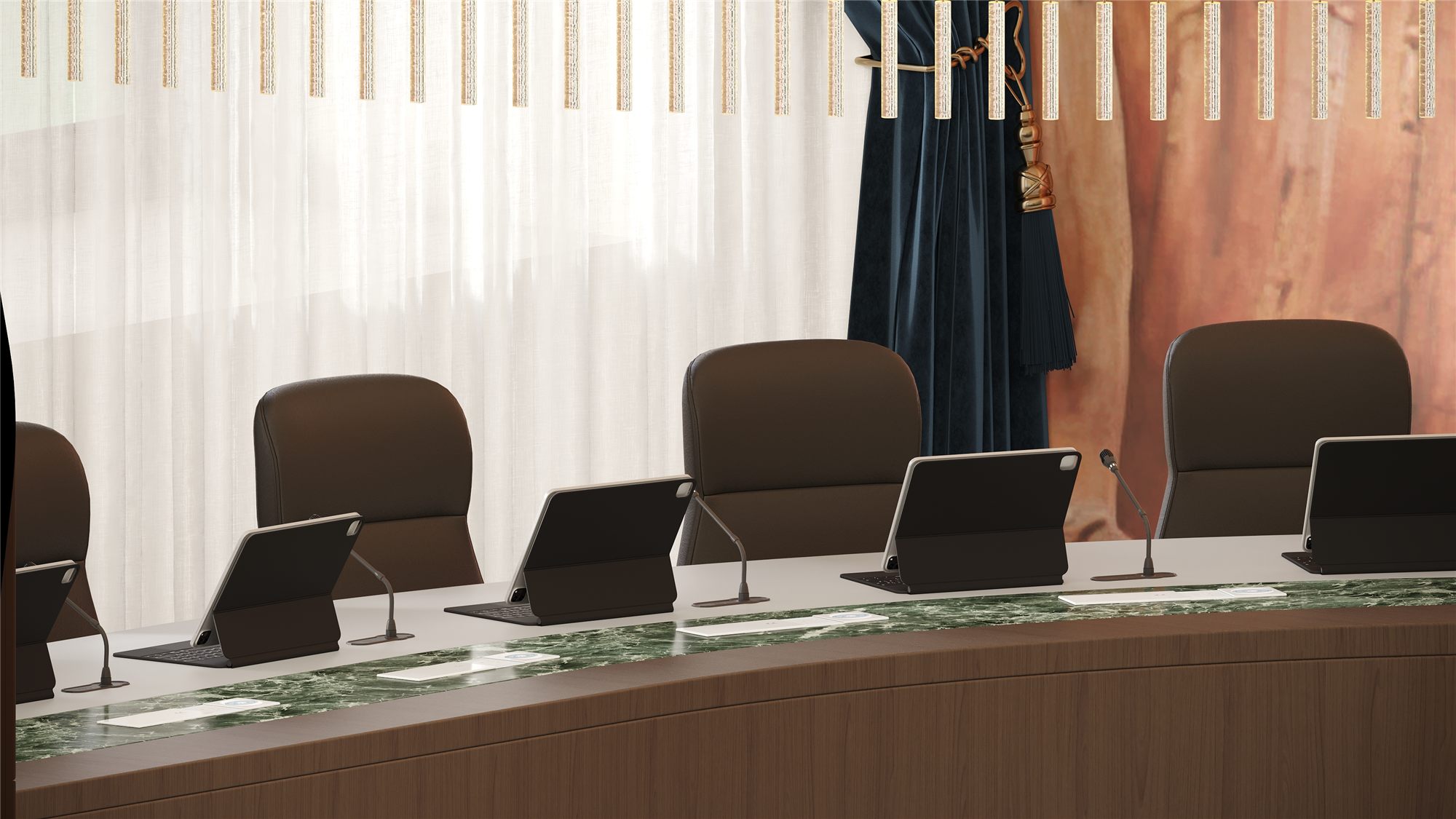
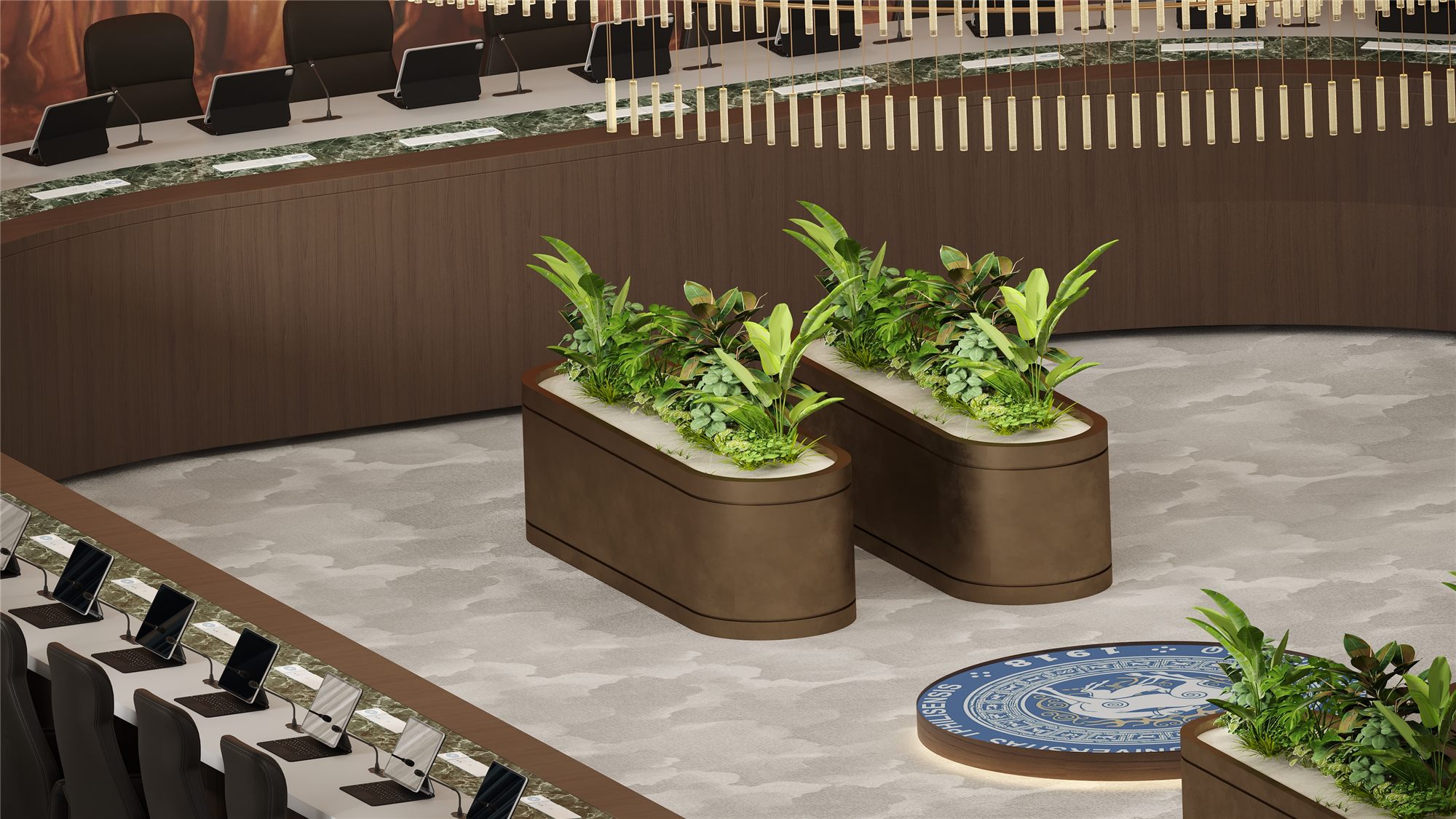
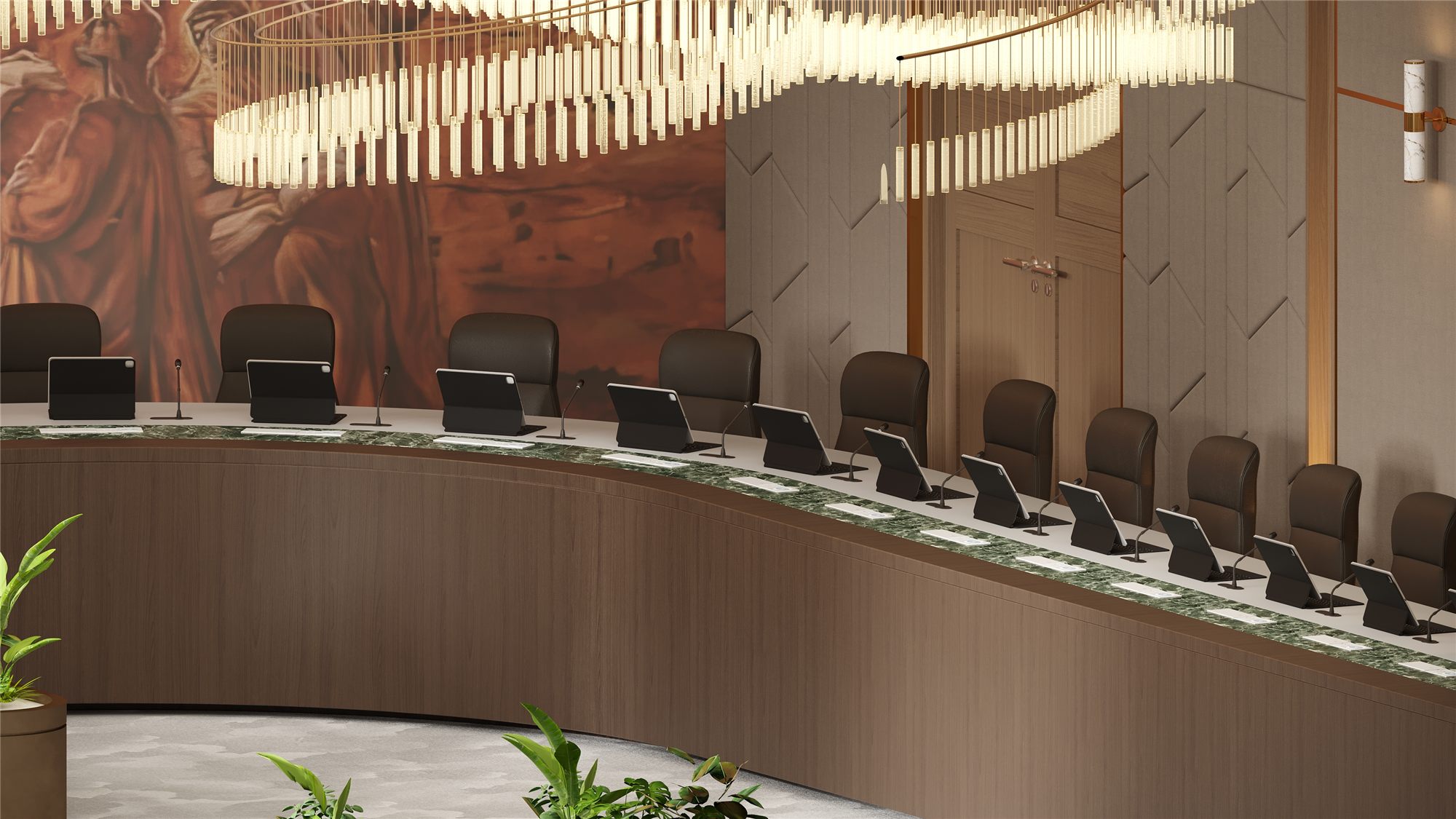
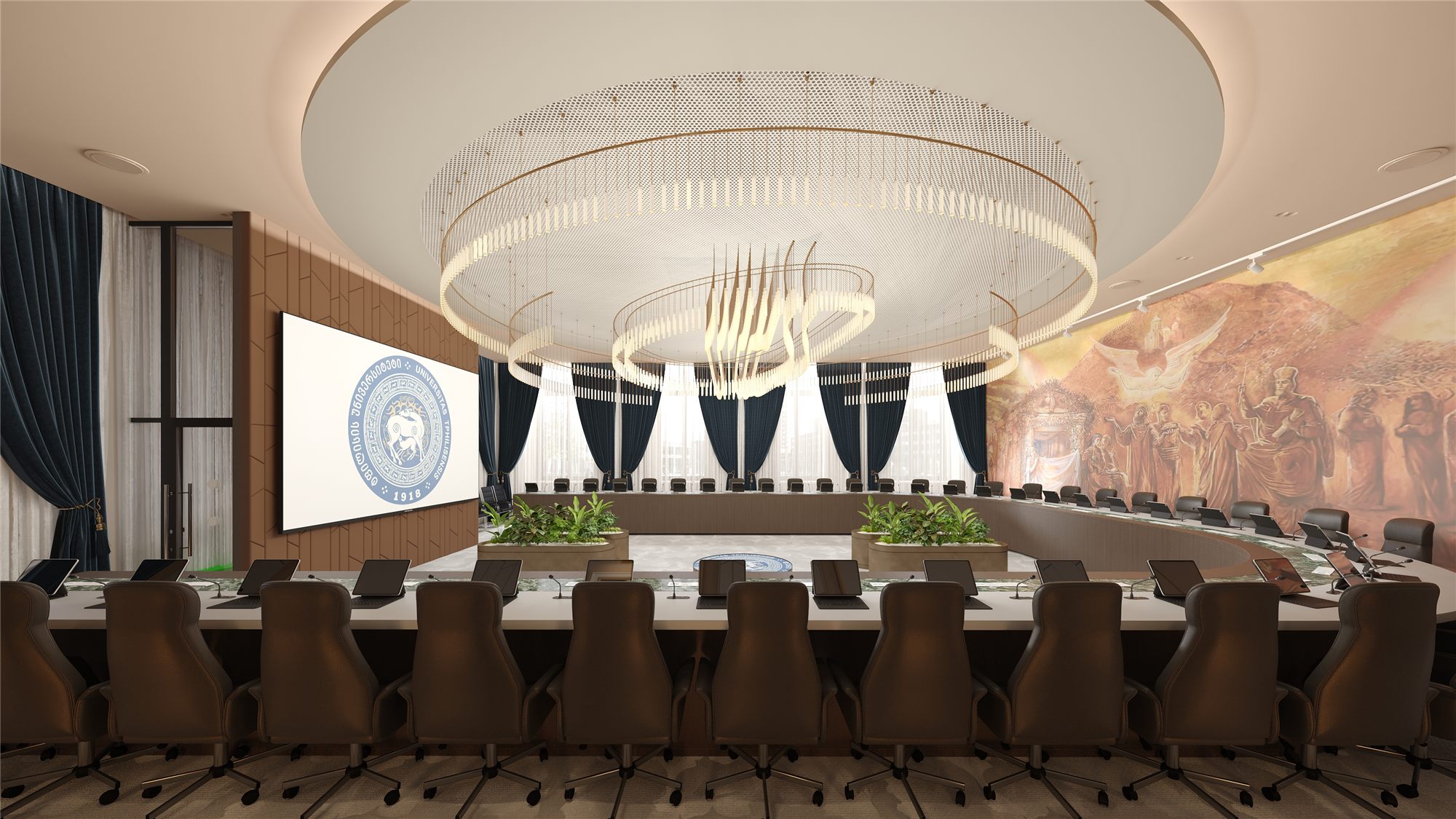
One of the key elements in the functional organisation of the auditorium is a bespoke U-shaped conference table. Its geometry is suited to the format of formal meetings, while its arrangement supports visual connection between participants and establishes a cohesive working environment.
The table’s form is more than a functional solution; it also plays an important role in shaping the overall interior composition. The visual character of the decorative lighting arrangement above the table was developed in relation to its geometry.
This approach allows furniture, lighting, and spatial organisation to be perceived not as independent elements, but as components of a unified architectural and design system.
Texdecor — Acoustic Panels Within a Historic Setting
Acoustics are particularly important in the design of a conference space. Speech intelligibility, communication between participants, and the control of sound reflections directly influence the quality of meetings and the comfort of the environment.
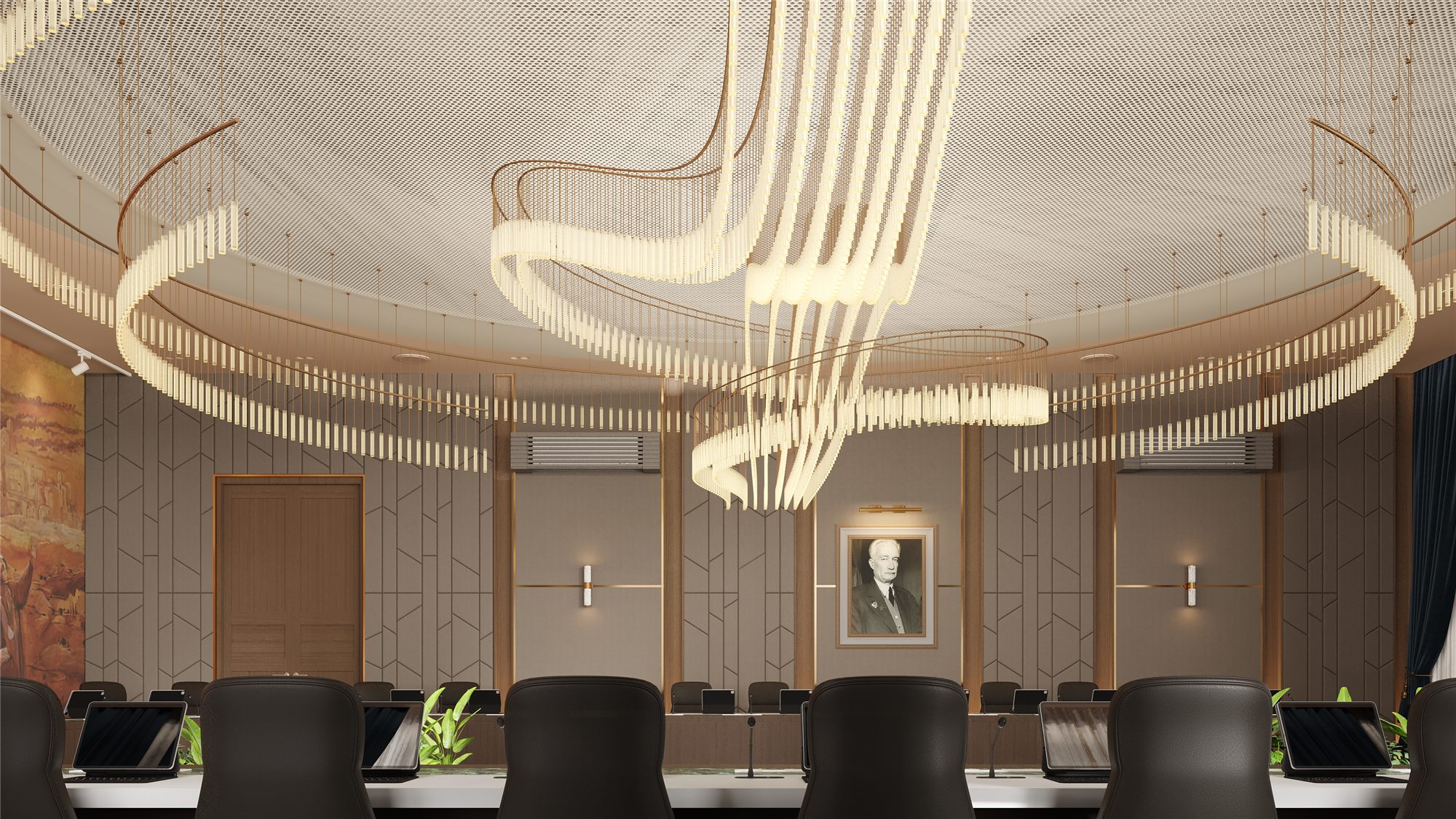
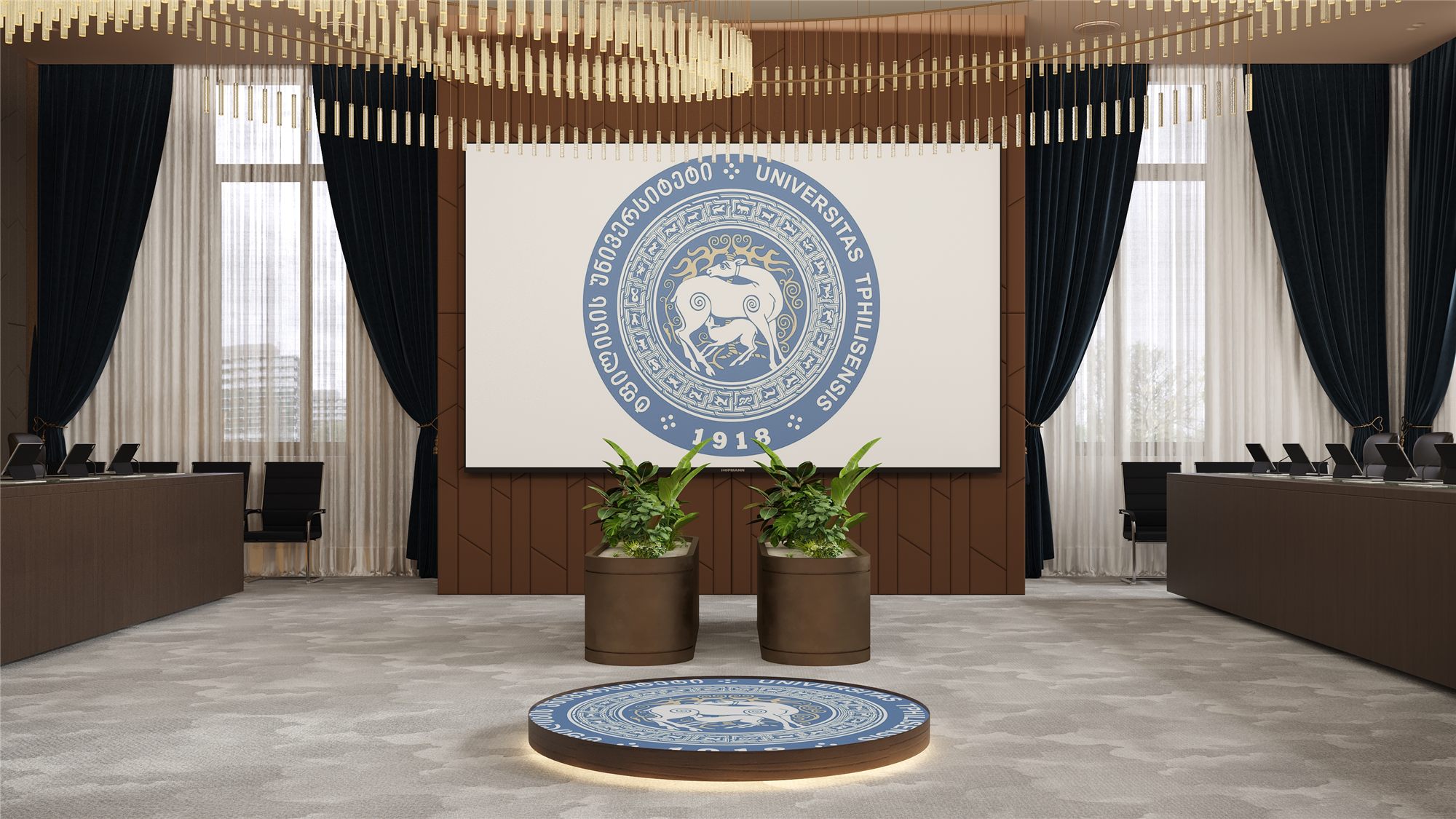
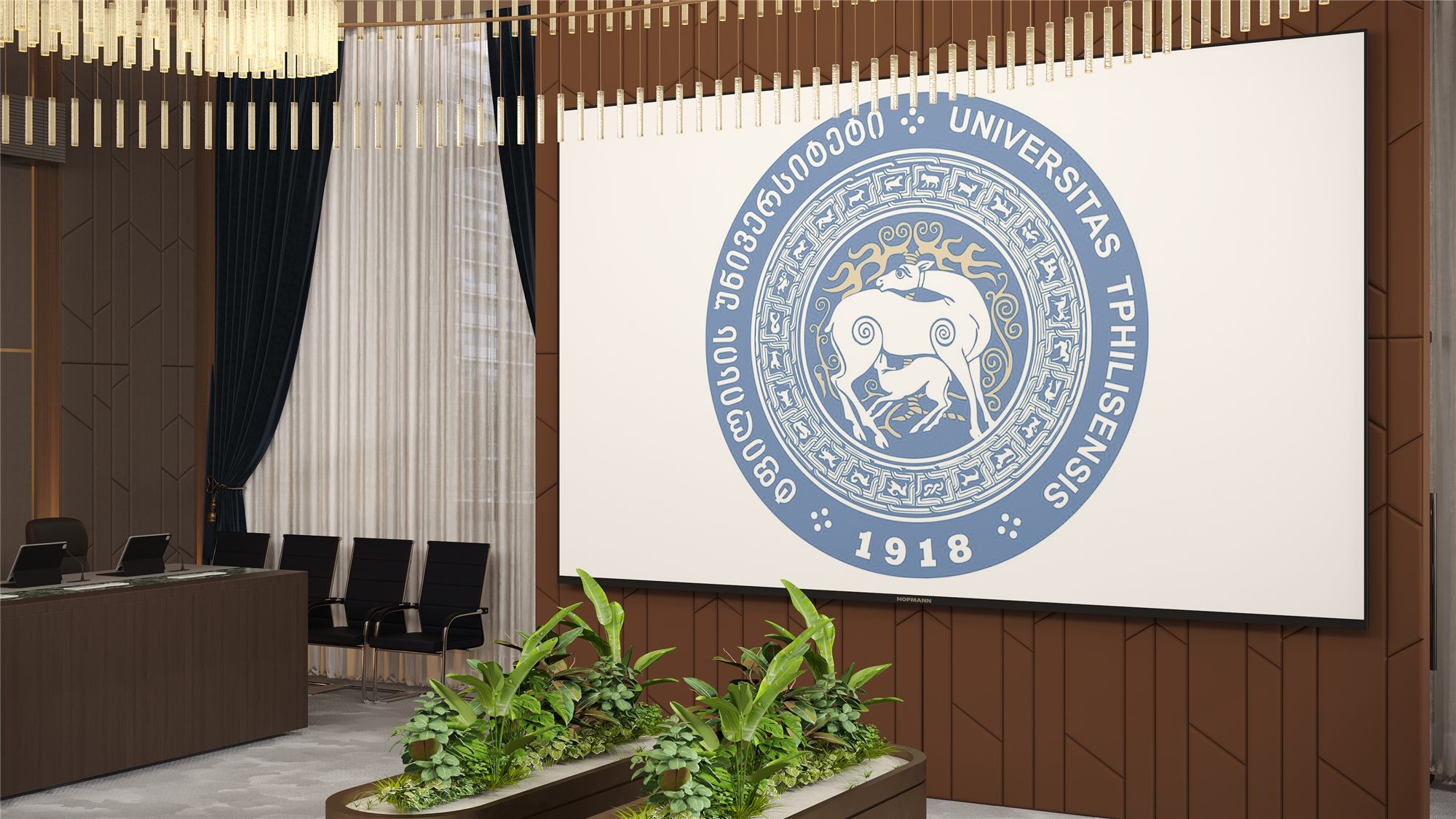
To address these requirements, the interior features special acoustic wall panels by Texdecor, a premium French brand. Their selection was guided by both their acoustic function and their potential to establish visual harmony with the historic fresco and the overall material palette.
Founded in 1974, Texdecor is known for its decorative wallcoverings and acoustic solutions. The brand’s products enable designers to make wall surfaces part of both the aesthetic concept and the acoustic comfort of an interior.
In this project, the acoustic panels serve more than a technical purpose. They form part of the wall design, creating a balanced visual relationship with the historic setting through the use of contemporary materials.
ROOM DESIGN GALLERY is one of Texdecor’s exclusive importers in Georgia, offering access to materials from its portfolio of international premium brands for interior design projects.
Camengo — Textiles as an Acoustic and Decorative Element
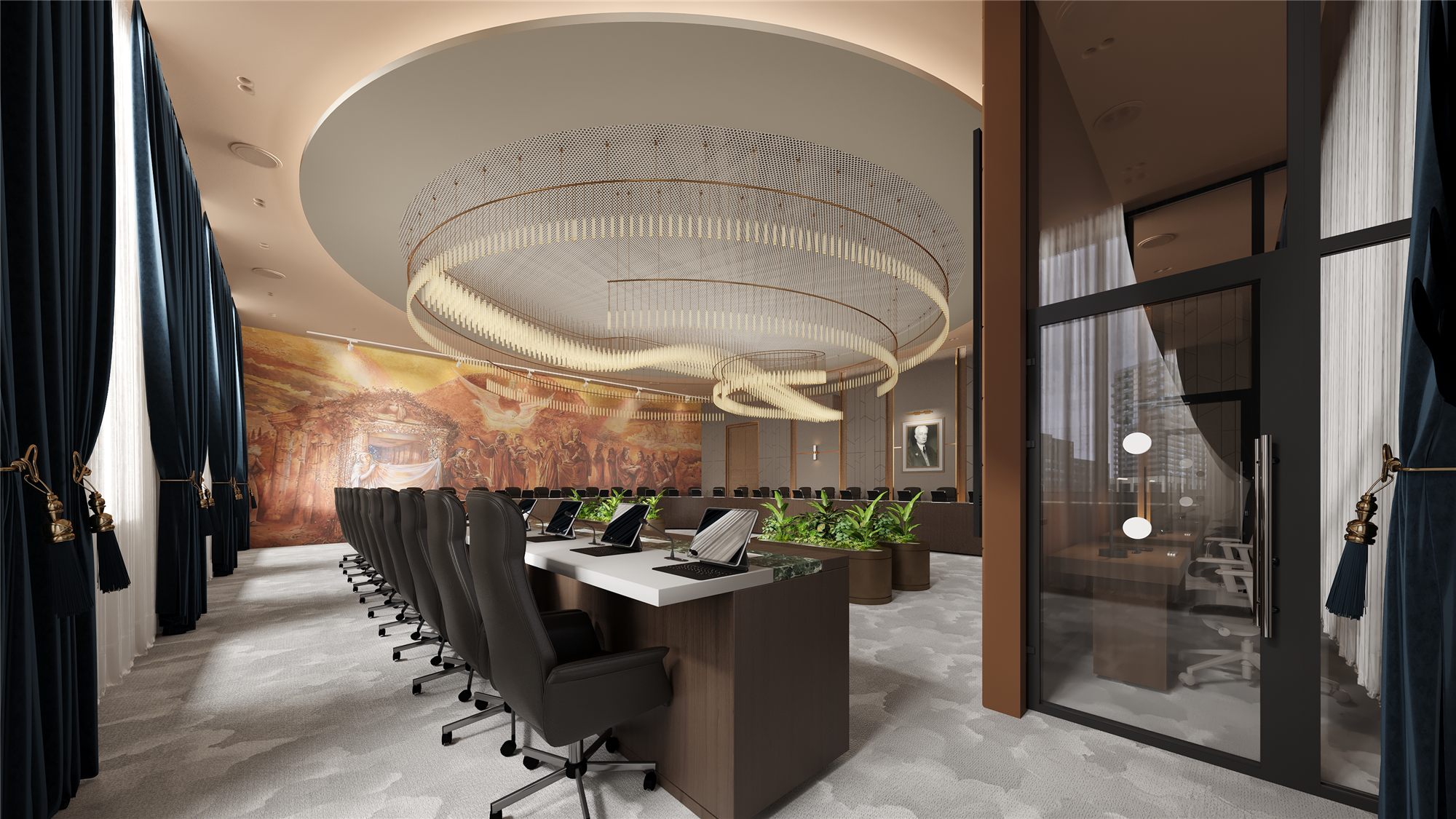
The composition of the walls and window areas is complemented by curtains made from fabrics by Camengo, a premium French brand.
Camengo specialises in decorative textiles, creating fabrics that contribute to an interior through colour, texture, and material character. Its collections enable designers to integrate textiles harmoniously into the overall design concept.
In Auditorium No. 107, the curtains are more than a decorative feature. Together with the wall finishes, furniture, and lighting, they form an integral visual layer of the interior. The textiles also contribute to the acoustic environment, although their specific acoustic and fire-performance characteristics depend on the technical specifications of the selected fabric.
The combination of Texdecor acoustic panels and Camengo textiles demonstrates how materials with different purposes can be brought together within a unified interior concept, allowing technical requirements and visual quality to complement one another.
Lasvit — Architectural Lighting and Geometric Harmony
A defining feature of the auditorium’s design identity is the Lasvit lighting composition, positioned above the U-shaped conference table.
Of Czech origin, the internationally recognised design brand Lasvit is known for its work in glass design, decorative lighting, and architectural installations. Its design approach often transforms lighting from a simple source of illumination into an element that defines the artistic and architectural identity of a space.
In Auditorium No. 107, the lighting composition is carefully related to the geometry of the conference table. Its form and arrangement echo the table’s curved contours, creating visual continuity and compositional balance throughout the space.
The lighting introduces a contemporary dimension to the interior while establishing a considered relationship with the historic fresco rather than competing with it. This relationship expresses one of the project’s central design principles: contemporary elements should enrich the historic environment, not replace it.
Lighting — From Decorative Accent to Architectural Element
Lighting is treated as an integral part of the interior concept. Its role extends beyond the practical task of illuminating the space to shaping the composition, proportions, and relationships between the principal design elements.
The historic fresco, conference table, and Lasvit lighting installation above it establish the main visual axis of the room. At the same time, the lighting solution is considered in conjunction with the other materials in the interior, including the acoustic panels, textiles, and furniture.
As a result, the decorative lighting does not dominate the space as an isolated object. Instead, it unifies the interior composition, emphasises the table’s form, and establishes a distinctive character suited to a contemporary formal environment.
Material Harmony and Functional Integrity
The design of Auditorium No. 107 is guided by the principle that material selection must respond to both aesthetic and practical requirements.
The historic fresco defines the identity of the space; Texdecor acoustic panels combine wall design with acoustic considerations; Camengo textiles introduce texture and visual depth; and the Lasvit lighting composition establishes a connection with the geometry of the main spatial element.
Together, these components create an environment in which each material contributes to the overall result according to its specific purpose. The project’s value lies in this coordinated approach, through which technical performance, visual character, and historical significance become part of a unified design concept.
ROOM DESIGN STUDIO × ROOM DESIGN GALLERY
The Auditorium No. 107 project reflects ROOM DESIGN STUDIO’s approach to designing public and representative spaces: the quality of an interior is determined not only by its visual impact, but also by the relationship between concept, function, lighting, acoustics, and materials.
ROOM DESIGN STUDIO develops the design concept, functional solutions, and material-selection strategy. ROOM DESIGN GALLERY, through its portfolio of international premium brands, supports the selection of materials and interior elements suited to the project’s requirements and facilitates their availability in Georgia.
In this project, the solutions by Texdecor, Camengo, and Lasvit respond to specific design objectives: acoustic comfort, textural richness, and architectural lighting. The brands are not simply names within a specification; they are part of the design strategy through which the overall concept is realised.
Historical Significance Through a Contemporary Design Language
Auditorium No. 107 in Building I of Tbilisi State University is a space where historic artistry and contemporary design solutions come together to form a cohesive environment.
For ROOM DESIGN STUDIO, the project’s central value lies in achieving this balance: creating an interior in which functionality, material quality, and design individuality extend and complement the significance of the historic setting.